




Your dog spends hours in their bed every day – and eventually, it shows. Hair, dander, paw prints, and that typical doggy smell accumulate faster than you think. The good news: washing a pet bed is no rocket science if you know what to look out for. In this article, we show you how often you really need to wash it, what can go in the washing machine, and what is better handled by hand.

Table of contents
- Why you should wash the pet bed regularly
- Washing the pet bed in the machine – how to do it right
- Cleaning the pet bed without a washing machine
- Removing urine stains and odours effectively
- Material check: How to care for faux leather, corduroy & co.
- The sleeping spot that doesn't fear laundry day: 'Nest' by mokebo
Why you should wash the pet bed regularly
A pet bed is more than just a cosy spot. It is also a collection point for fur, saliva, dander, and everything your dog brings in from outside. If they walk through mud or puddles, it ends up directly in the bed via their paws. If the bed is not cleaned regularly, bacteria can settle there, which can quickly become a problem for sensitive dogs or allergy sufferers in the household.
How often you should wash the pet bed depends heavily on how your dog uses it. As a rule of thumb: wash the cover every two to four weeks; for puppies, heavy-shedding breeds, or if your dog spends a lot of time outdoors, feel free to wash it weekly. If the bed already smells noticeably or you see stains, that is your signal to act immediately instead of waiting.
A bed that you keep clean regularly also lasts longer. Otherwise, dirt and moisture settle deep into the seams and filling, and eventually, you won't be able to get it out completely.
Washing the pet bed in the machine – how to do it right
Can you wash a pet bed in the washing machine? In most cases, yes – but only if the cover and bed are designed for it. Before you just throw the bed into the drum, take a look at the care label. The wash symbols tell you everything you need to know: a wash tub graphic with a number indicates the maximum temperature, while a crossed-out symbol means that this specific process is off-limits.
Can I wash my pet bed at 60 degrees? That depends entirely on the material:
- Cotton or hemp: often tolerate 60 degrees, which reliably removes germs
- Polyester or corduroy: usually only 30 to 40 degrees on a gentle cycle, otherwise shape and colour may be affected
- Sensitive fillings: when in doubt, always choose the lower temperature
If there is nothing on the label or it is no longer legible, it is better to wash it cooler and more often than to risk the bed.
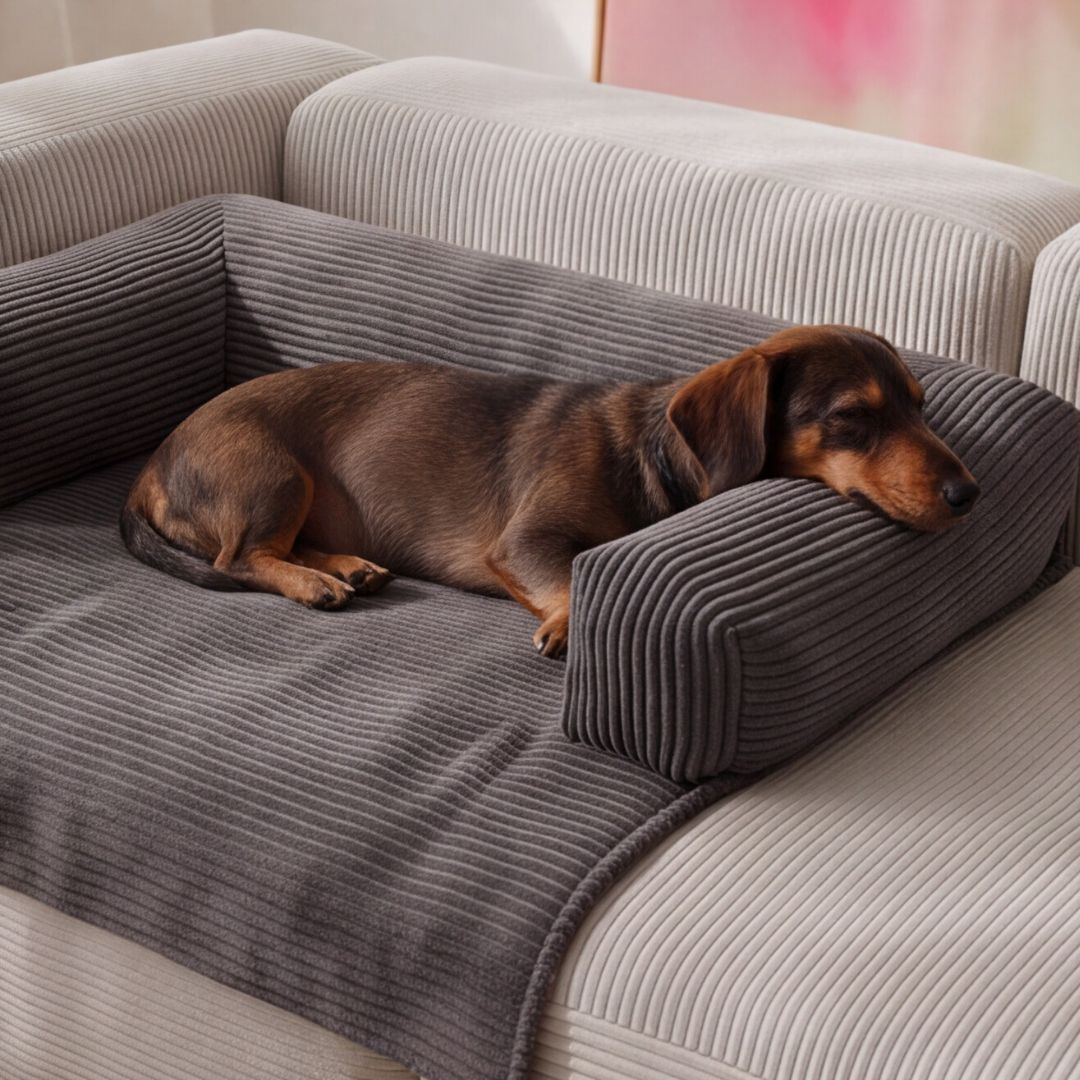
Machine washing is particularly practical when the cover and filling can be separated. With well-designed beds – for example, with a removable inner cushion and a cover that can be zipped off – you only put the cover in the machine, while the core stays out and doesn't soak up water. This not only protects the material but also makes the whole procedure much faster. With the 'Nest' pet blanket by mokebo, that is exactly the core idea: cover off, machine on. The corduroy cover opens in no time with a zip and goes into the wash at 30°C, while the inner cushion simply stays out.
A practical tip: Never wash the pet bed together with heavily shedding clothing or towels, as this will clog the lint filters. A laundry net also helps to protect zips and seams.

Cleaning the pet bed without a washing machine
Not every pet bed fits in the machine, whether due to size or because the material doesn't tolerate it. How do I clean a pet bed then? For intermediate cleaning, a vacuum cleaner with an upholstery nozzle is often enough to remove hair, crumbs, and dust from the seams. You should do this regularly anyway, regardless of how often you do a full wash.
For stains, hand-warm water with a mild, unscented detergent helps. Apply the solution with a soft cloth or brush, work it in carefully, and rinse thoroughly afterwards so that no residue remains in the fabric that your dog could rub against later. For cleaning a pet bed without a washing machine, a bathtub or a large basin is also suitable for larger beds, where you can soak and squeeze out the bed.
Dry cleaning a pet bed sounds like the professional solution, but it is rarely really necessary. For home use, a thorough hand wash with warm water is almost always enough. You should only resort to professional cleaning if the material truly cannot tolerate moisture or if stubborn odours simply won't go away.
Removing urine stains and odours effectively
Whether it's a puppy, a sick dog, or a small mishap, cleaning urine from a pet bed is something most dog owners face eventually. It is important to act quickly. Blot the liquid first with an absorbent cloth instead of rubbing, otherwise, the stain will only spread further.
Afterwards, it is best to work with an enzyme cleaner from the pet shop. It actually breaks down the odour-causing substances in the urine instead of just masking them, which normal detergent often fails to do. Alternatively, a mixture of water and vinegar in a one-to-one ratio works well to neutralise odours before you wash the bed normally.
If a musty smell remains despite washing, a round in the fresh air often helps. Hang the bed outside in the shade; direct sunlight can bleach colours. Anyone who struggles with stubborn odours at home more often will find further tricks in our article Shoe cabinet odours begone, which can be applied just as well to textiles throughout the house.

Material check: How to care for faux leather, corduroy & co.
Not every material requires the same care, so it is worth taking a look at what actually covers your pet bed.
Faux leather
Cleaning a faux leather pet bed is usually the most uncomplicated option: a damp cloth with a little mild washing-up liquid is generally enough to wipe away dirt and stains. Faux leather is water-repellent by nature, so little penetrates the surface. You should still avoid aggressive cleaners or alcohol, as they can make the material brittle.
Corduroy
Corduroy covers are softer and more comfortable for sensitive dogs but require a bit more attention. The fabric absorbs moisture and odours more easily, which is why regular washing is particularly important here. Corduroy usually tolerates 30 degrees on a gentle cycle well, but rarely more, as it can otherwise lose its shape. If you want to know how best to care for corduroy in general, you will find detailed tips in our guide How to clean and care for your corduroy sofa properly, which can be applied one-to-one to pet beds.
Synthetic fibre filling
For beds with synthetic fibre filling, you should pay particular attention to the drying time. Moisture trapped in the core encourages mould. Therefore, always let the filling dry completely before the bed is used again, if necessary over several days in an airy place.
The sleeping spot that doesn't fear laundry day: 'Nest' by mokebo

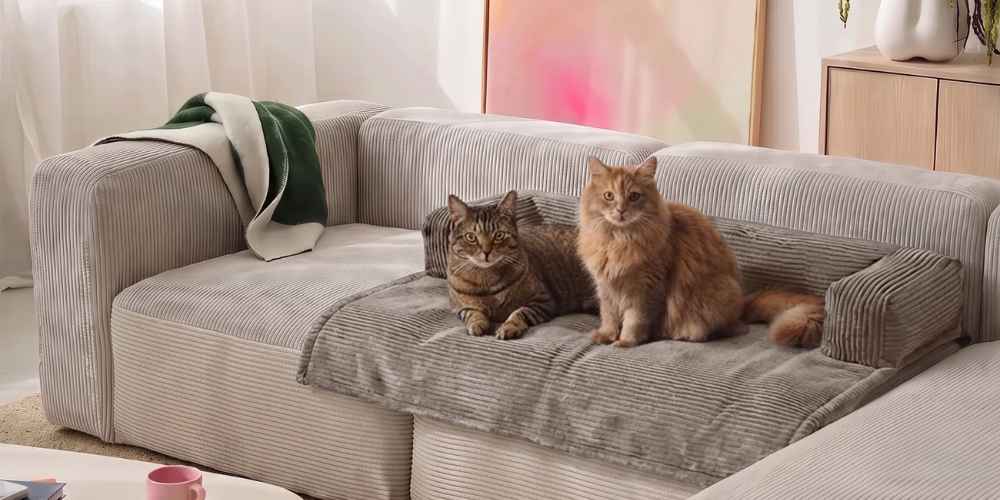
At mokebo, you will find 'Nest', a washable pet blanket for dogs and cats that can be used as a pet bed, cat bed, dog basket, or classic pet blanket – and was designed for easy cleaning from the start.
The inner cushion of 'Nest' can be completely removed, so the cover can be washed separately instead of having to deal with the whole bed at once. The cover made of soft corduroy fabric opens in no time with a zip and goes into the wash on a 30-degree gentle cycle or even by hand – having a washable pet blanket simply makes the difference in everyday life. The raised, padded backrest additionally supports your dog's head and neck, whether they are lying on the sofa, in the bedroom, or in the car.
As a pet blanket for the sofa or pet blanket for the bed, 'Nest' simultaneously protects your furniture reliably from pet hair, dirt, and scratches. 'Nest' is available in two sizes, suitable for small, medium-sized, and large dogs as well as a cat blanket.
A practical tip: If you are often on the go, use 'Nest' additionally as a pet blanket for the back seat in the car or generally as a pet blanket for travel. This saves a separate purchase and is just as easy to wash as at the main spot at home.