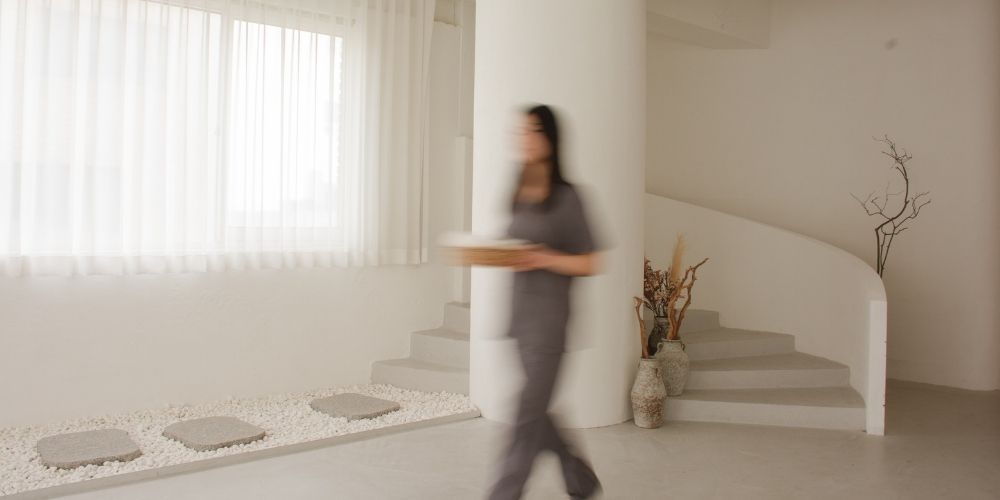
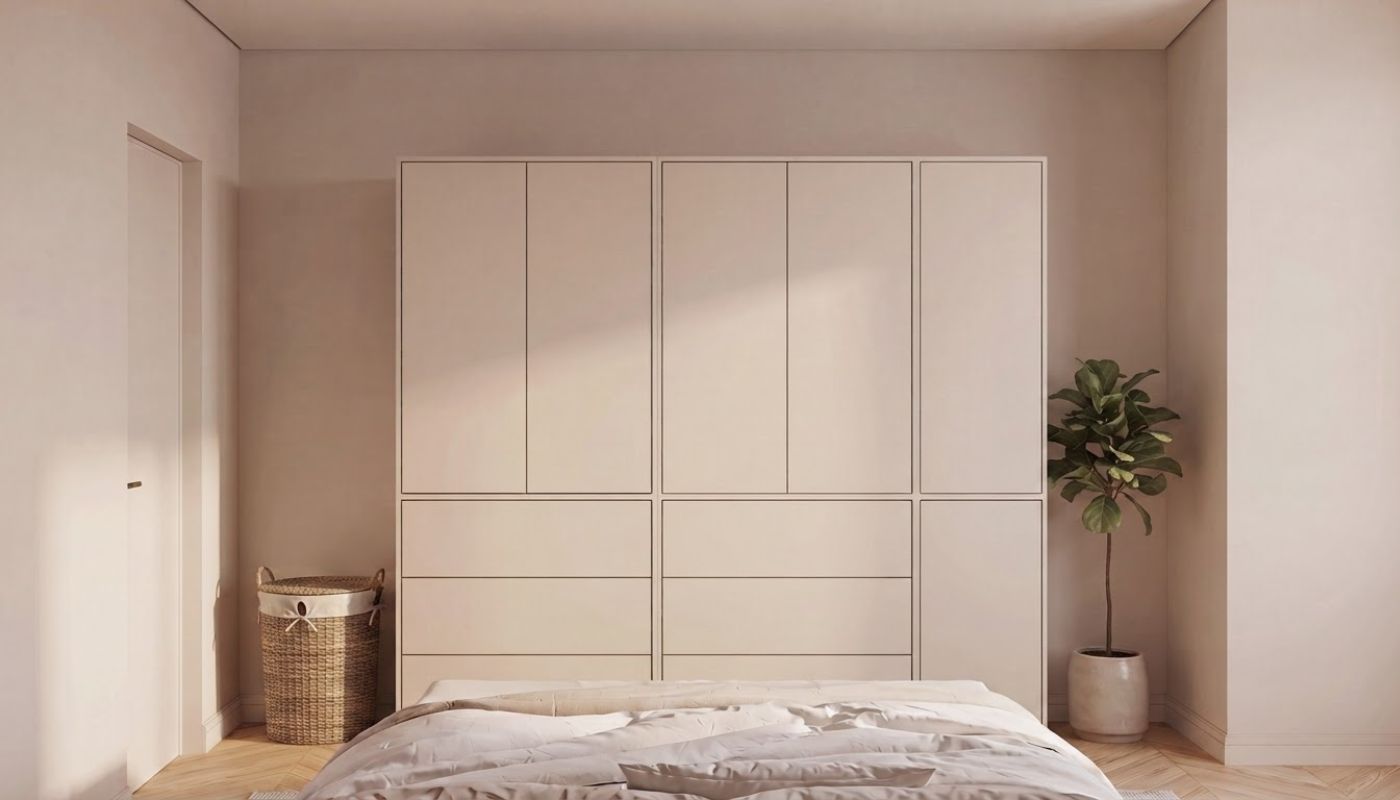

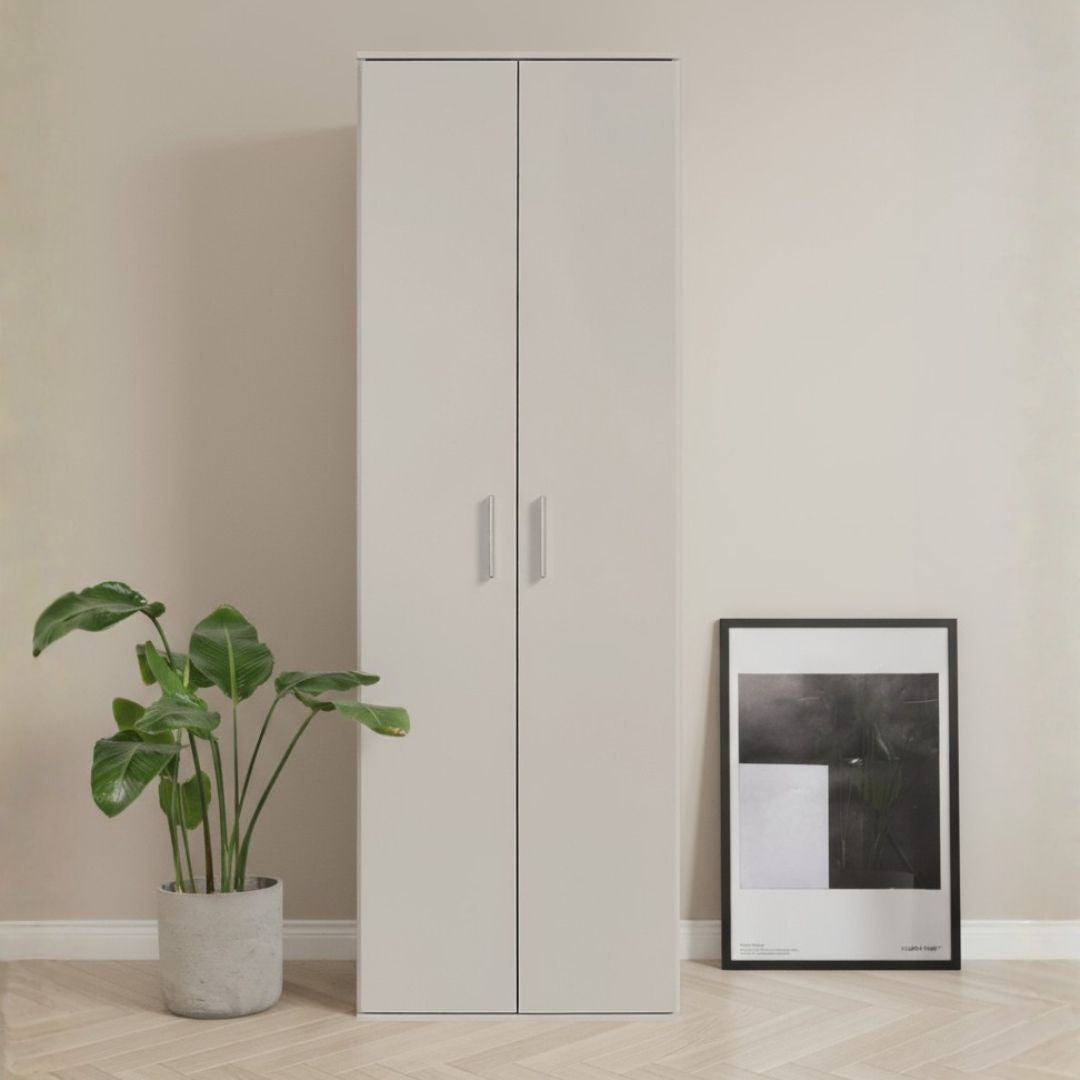
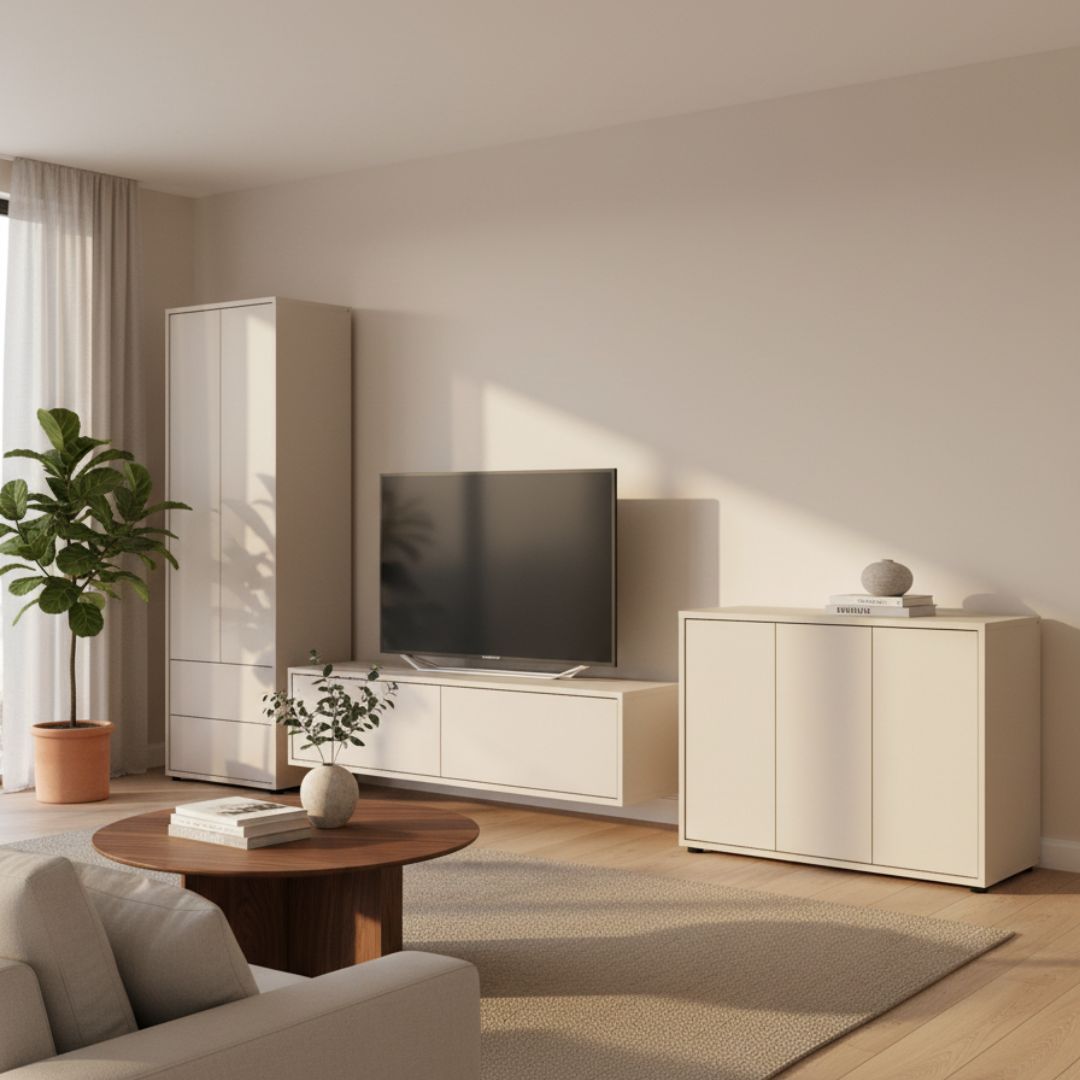


Know the feeling? You step into a modern room and every word, every footstep echoes unpleasantly. It's not just distracting—it makes the space feel uncomfortable, affects speech clarity, and can even be tiring over time.
The reason is simple: Large, empty rooms with lots of smooth, hard surfaces (like tile, hardwood, bare walls, or big windows) reflect sound. The result is uncontrolled echo in the room.
Here's the good news: You don't need to be an acoustics expert or start expensive renovations! We'll show you 7 simple, stylish ways to reduce echo in your room. Many of these tips work beautifully with the right furniture and textiles—perfect for an easy upgrade.
Table of contents
Simple quick fixes
Fortunately, the most effective ways to tackle echo are often the ones that make your home more beautiful and cozy anyway. They use the natural sound-absorbing properties of furnishings.
1. The ultimate tool: Bring more textiles into the room
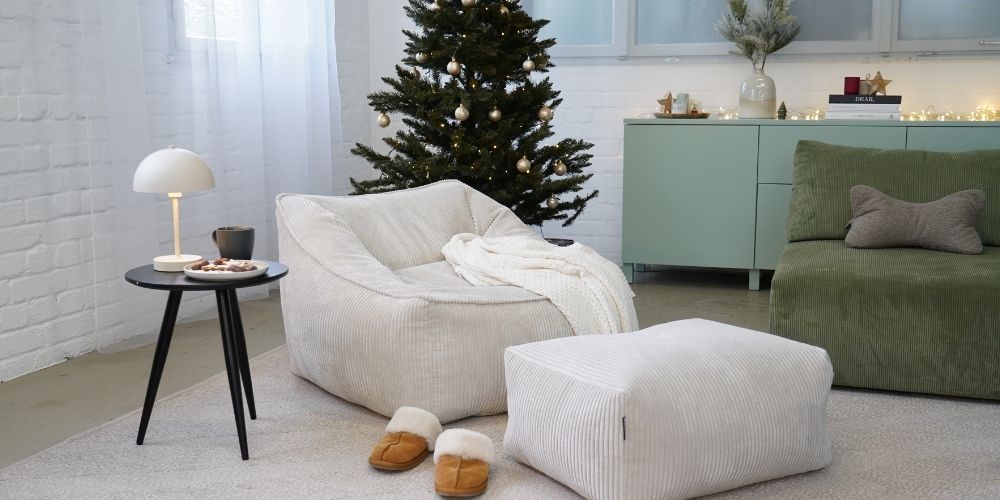
Textiles are the most unobtrusive and perhaps the most charming sound absorbers. They prevent sound from bouncing harshly between ceiling, floor, and walls.
-
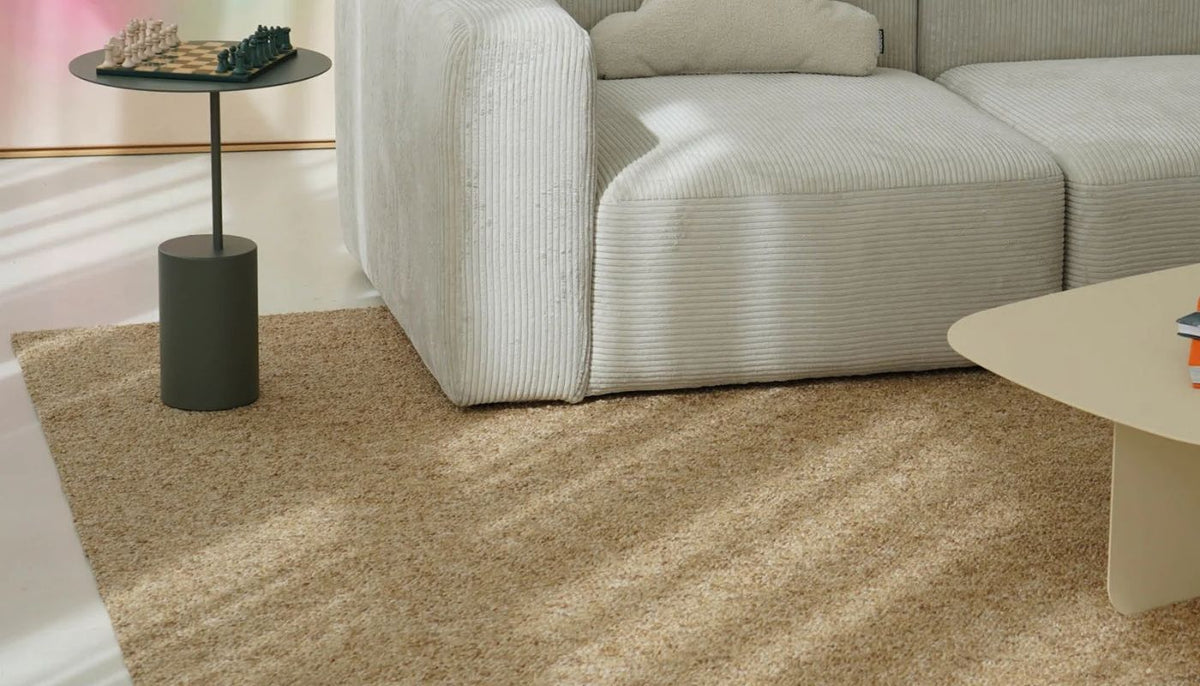
Rugs: A rug is the most important tool for reducing echo from below. Make sure it doesn't just go under the coffee table, but covers a large portion of the floor—especially in the sofa and seating area.
-
Heavy curtains: Smooth glass windows reflect sound especially strongly. Thick, heavy curtains or drapes (velvet, wool, or opaque fabrics) are worth their weight in gold. They absorb enormous amounts of sound before it can bounce back into the room.
-
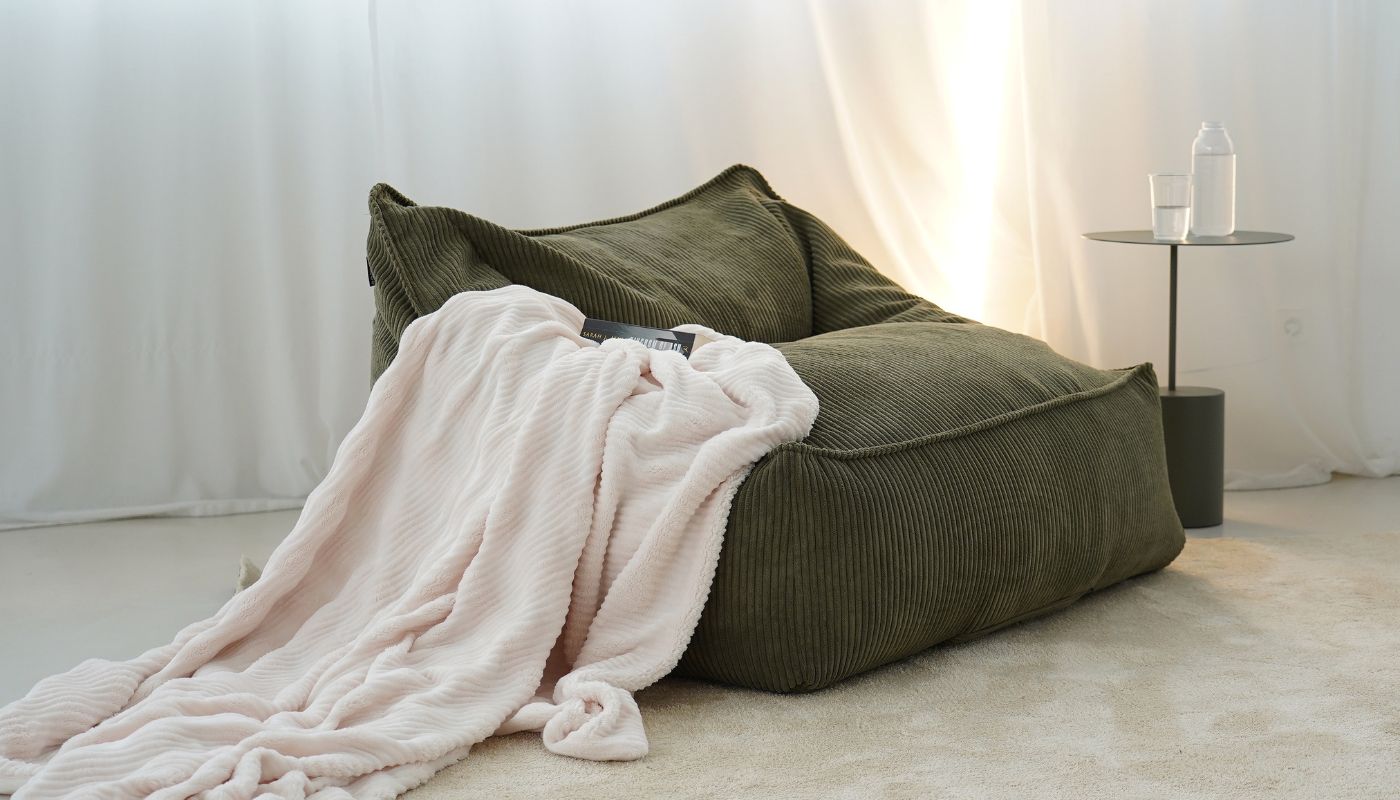
Pillows and throws: Scattered scatter cushions in various sizes and thick, knitted wool blankets on sofas and chairs create a textured surface that breaks up sound waves.

2. Say goodbye to empty space: Smart furniture placement
An empty room echoes—a furnished room doesn't. Every piece of furniture is a natural diffuser that breaks up and scatters sound waves.
-
Bookshelves as acoustic heroes: A tall, open, bookcase filled with books is acoustically fantastic. The irregular book spines break sound in countless directions and prevent the echo effect.
-
The right sofa: Large, deep upholstered furniture with a soft surface (e.g., a large modular sofa from mokebo) absorbs significantly more sound than delicate chairs or wooden benches.
-
Offset arrangement: Try not to line all furniture exactly along one wall. Place sideboards, chests of drawers, or armchairs at slight angles in the room to create different reflection points.
3. Fill your walls: Art, mirrors, and plants
Smooth, bare walls are the main culprits behind echo. Here, texture wins!
-
Large wall art: Large, framed canvases or pictures break up the surface.
-
Wall textiles: Modern, thick wall hangings are back in style and offer excellent sound dampening.
-
Plants: Large houseplants with dense foliage gently scatter sound and improve air quality too.

Specialized acoustic solutions
If you've exhausted all textile tricks and echo is still noticeable, it's time for more professional solutions. These elements are specifically designed to eliminate room echo.
1. Sound absorbers and acoustic art
Sound absorbers are the backbone of professional room acoustics. They're made from sound-absorbing material (often fleece or specialized acoustic foam) that converts sound energy into heat energy, removing it from the room.
-
Acoustic art is the most aesthetic solution. It works like a traditional absorber but comes printed with an image or covered in fabric that perfectly matches your décor.
-
Acoustic panels made from wood or felt offer a modern, Scandinavian-inspired look and are very effective on walls or behind the TV.

2. Ceiling clouds and baffles
The ceiling is often the largest, unbroken reflection surface in a room. Especially in older buildings or lofts with high ceilings, it's a major echo hotspot.
Ceiling clouds (or baffles) are sound-absorbing elements suspended horizontally or vertically from the ceiling. They're extremely effective because they can absorb sound from above and below.
Conclusion: Reducing room echo is no mystery
Creating a room with pleasant acoustics isn't a mystery—it's a combination of smart furnishing and targeted sound dampening.
Before reaching for specialized solutions, always start with the simplest and most stylish steps: What to do against echo in a room? More furniture, more textiles, bigger rugs!
Not only will you improve the sound, but you'll also boost comfort and cosiness in your home.
Start improving your room acoustics now and explore our stylish furniture and textiles that make your home more beautiful and acoustically pleasant.